Case study
Housing dispute service design for the Renters’ Rights Act
Overview
The HMCTS housing dispute service project was designed to streamline housing possession claims in line with the Renters’ Rights Act, which includes the abolition of no-fault evictions. The service aims to provide a seamless, end-to-end online process with a paper-based option available for non-digital users, addressing the needs of private and social landlords, tenants, HMCTS staff and the judiciary.
Primary goals
- Design an accessible, user-friendly service that simplifies housing possession claims and aligns with legal frameworks in England and Wales
- Minimise manual processing, extend digital support for all claim types and reduce administrative workloads on HMCTS staff
- Improve user engagement by providing clear communication, early-stage guidance and support for defendants
Challenges
- Aligning with new legislative requirements: developing a system which complies with the Renters’ Rights Act and has the flexibility to adapt to future policy changes
- Supporting both digital and paper accessibility: while encouraging digital adoption, the service still needed to support a paper-based option for users without digital access
- Addressing diverse user needs: the service needed to cater to different user groups, including private landlords, tenants, social housing providers, court staff and judiciary members, each with unique challenges and goals
My role
As service design lead, I directed the discovery phase, ensuring compliance with key legislative requirements and Government Digital Service (GDS) standards.
My responsibilities included:
- Conducting extensive discovery research to identify user needs and operational challenges
- Designing and facilitating workshops to ideate on the future service design and align teams on project goals
- Developing and mapping current and future service journeys
The work
Discovery activities
The discovery phase involved comprehensive research and collaborative sessions to build a deep understanding of user needs, operational pain points and service challenges.
Key activities included:
- Court visits and interviews with operational staff (e.g. judges, court staff, bailiffs and ushers) to observe real-world workflows, bottlenecks and common user issues
- Stakeholder and judiciary interviews to identify specific challenges related to case progression, outcome drafting and service inconsistencies
- User interviews and collaboration with support organisations to capture claimants’ and defendants’ experiences with the possession process, helping us pinpoint needs for clearer guidance, transparency and accessibility
- Mapping the as-is service to document the current journey, identify pain points and inefficiencies across user groups
- Service design workshops and show and tell sessions to share insights, engage stakeholders in solution ideation and align on service improvements
- Designing the future-state service based on gathered insights, developing a vision that streamlined user interactions, improved efficiency and aligned with HMCTS goals
Mapping the as-is service
This phase of discovery involved mapping out the current service journeys and identifying key user pain points and process inefficiencies.
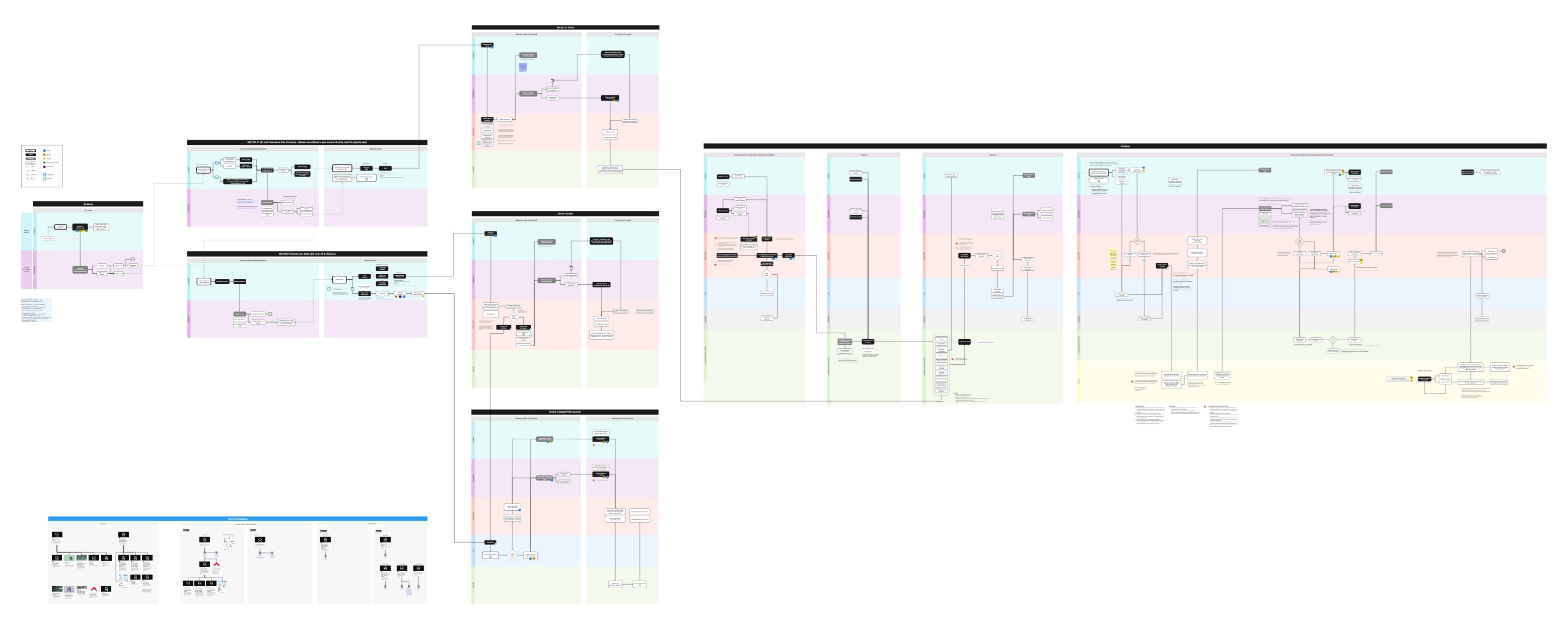
End-to-end as-is service. I developed a comprehensive end-to-end as-is service map to depict the entire current journey, from pre-application to enforcement. This map was instrumental in understanding the current service.
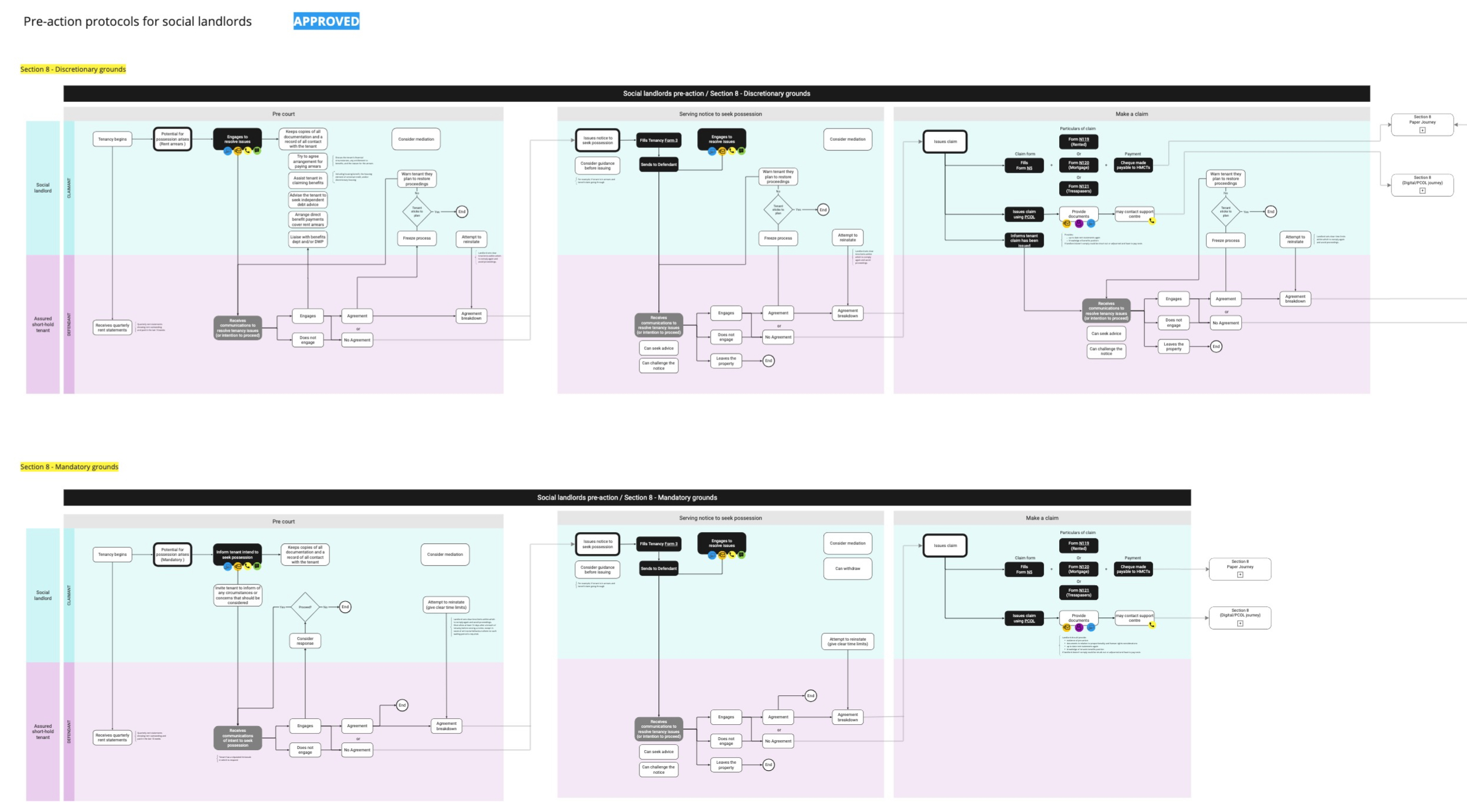
Detailed processes. To better understand specific operational processes, I created detailed Level 2 as-is service maps. These maps allowed us to identify and address challenges unique to specific parts of the user journey.
User insights
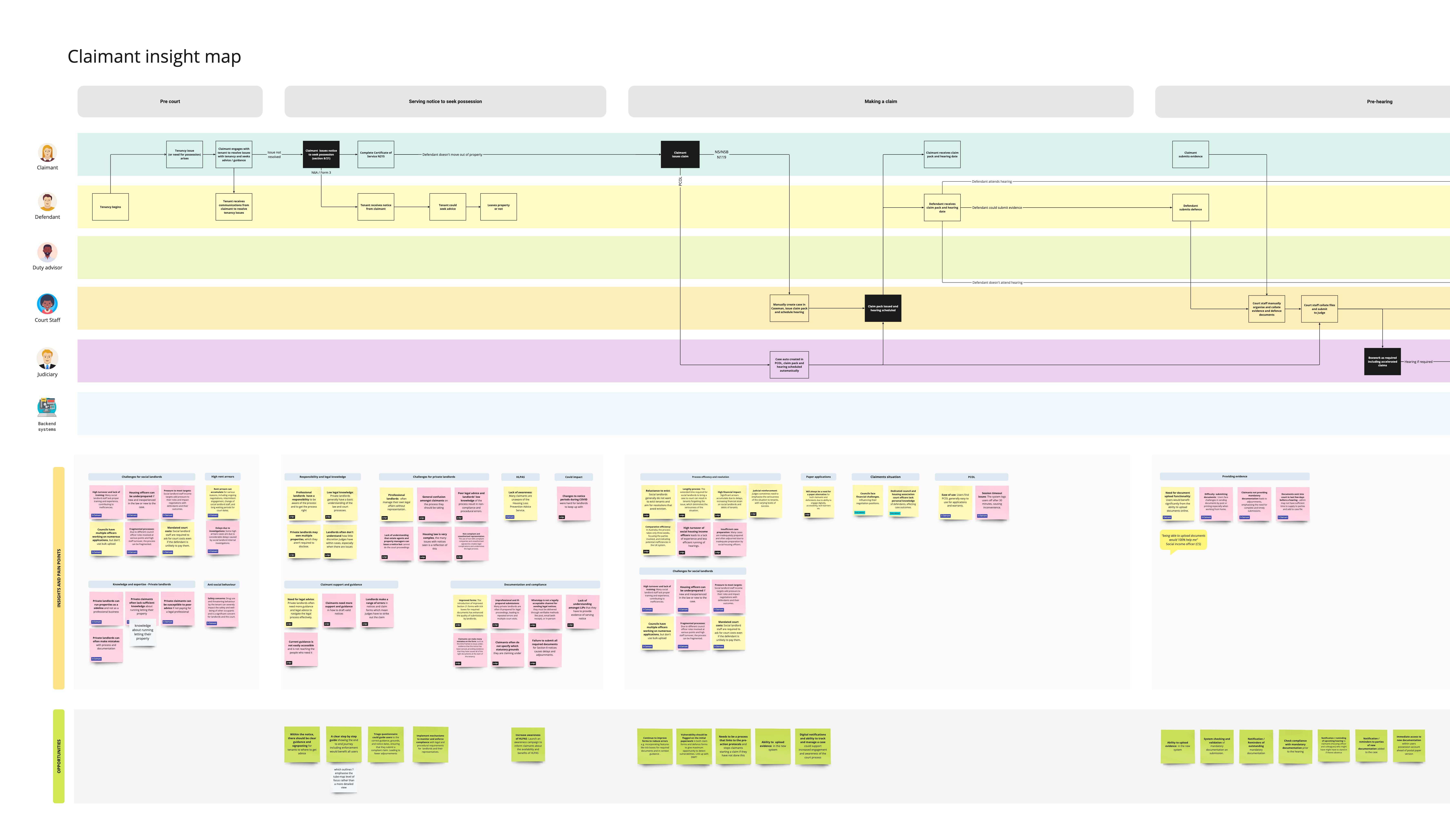
The insight maps capture hundreds of insights, pain points and needs identified during our research activities across all user groups. This artefact provided the foundation for service improvements by highlighting the challenges and guiding the development of change hypotheses.
Key insights and pain points
A summary of the key insights and pain points identified from discovery, highlighting the challenges faced by users and staff at each stage.
1. Pre-application stage
Notice serving errors and incorrect grounds for claims led to frequent delays for claimants.
2. Application submission
Limited digital support for claim types forced claimants to use paper processes, and errors on paper forms led to processing delays and adjournments.
3. Case progression and communication
- Lack of status updates: limited real-time case information created uncertainty for claimants and defendants, leading them to contact court staff for updates
- Low defendant engagement: defendants were often unaware of available support and faced challenges navigating the process, leading to disengagement
- Paper-based inefficiencies: reliance on paper throughout the process caused delays, errors and increased administrative workload, slowing case progression and communication flow
4. Court preparation and hearing
Defendants struggled with pre-hearing communications, and parties faced delays in receiving decisions due to judges’ manual outcome issuance on paper proformas, which were later manually entered into systems by court staff.
5. Post-hearing and enforcement
Delayed eviction notifications and manual, paper-based scheduling for bailiffs added operational inefficiencies, increasing wait times for claimants and creating a heavy administrative workload for court staff.
Future service design
Building on the insights and pain points from the current service, we structured the future service design with collaborative activities and visual mapping.
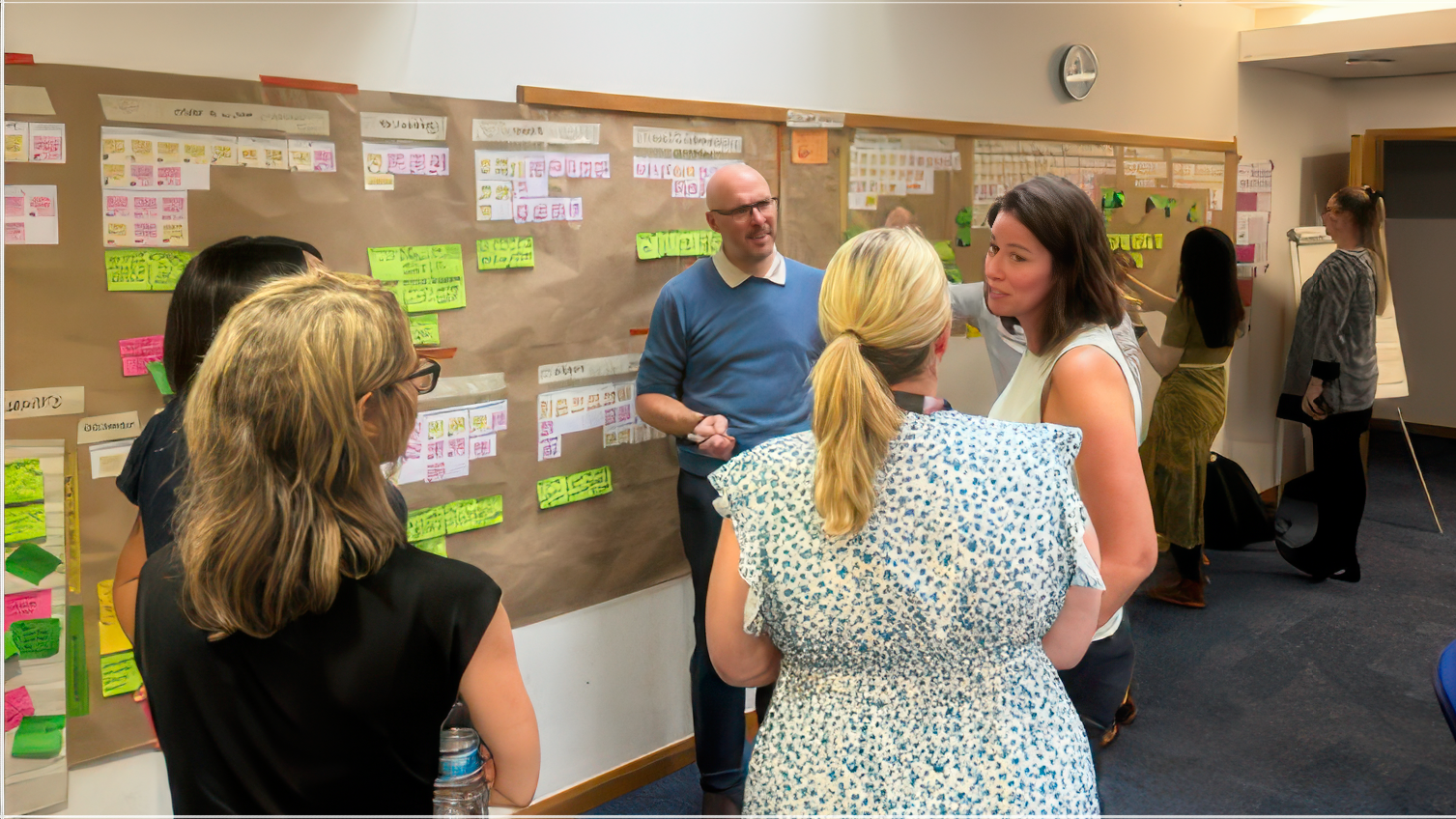
Service design workshops. Designed and facilitated ideation workshops with stakeholders and team members, exploring improvements and aligning on a cohesive vision for the redesigned service.
Change hypothesis development. Developed change hypotheses to outline targeted improvements for each major pain point, creating a roadmap for impactful service enhancements.
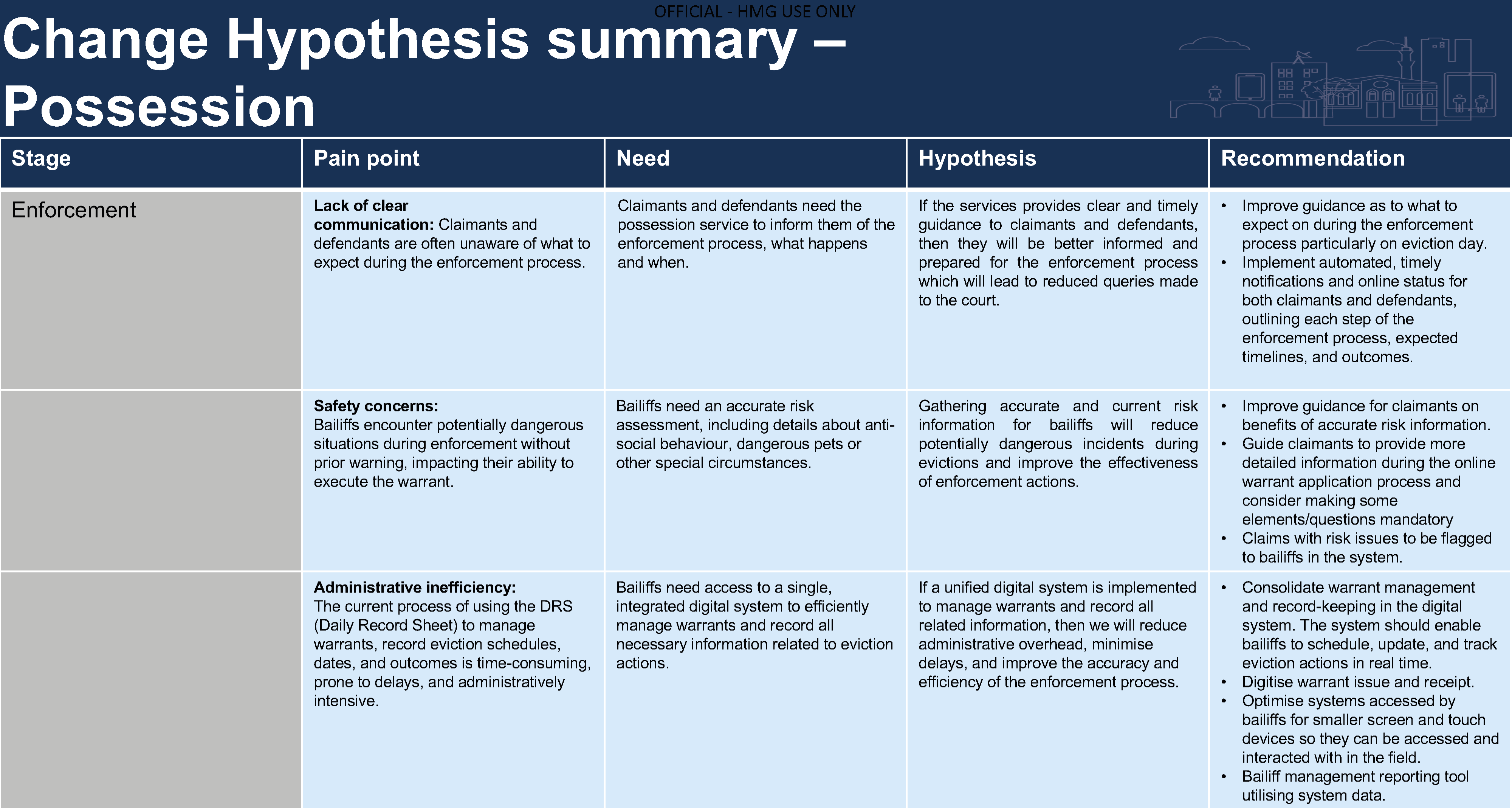
Future service opportunities
The future state design synthesised insights from the workshops, change hypotheses and feedback sessions, developing a cohesive service design that addressed identified opportunities.
Key opportunities for each service stage:
1. Pre-application stage
- Guided online notice generation minimises notice errors by providing step-by-step assistance
- Claim type triage directs users to the correct claim type, improving accuracy and reducing delays
2. Application submission
- Full digital application support for all claim types eliminates the need for paper application unless preferred by users
- Automated court routing ensures applications go to the correct court location, minimising misrouting issues
3. Case progression and communication
- MyHMCTS dashboard allows claimants and defendants to monitor their case status and receive reminders
- Pre-court guidance directs defendants to legal resources, encouraging engagement and improving preparedness
4. Court preparation and hearing
- Simplified pre-hearing communications provide clear, plain-language guidance to defendants
- Digital outcome issuing for judges enables faster notification of case outcomes by allowing direct digital entry
5. Post-hearing and enforcement
- Automated notification system keeps claimants and defendants informed of what happens next and when
- Digital warrant management system for bailiffs streamlines scheduling and outcome tracking, improving workflow efficiency
Visualising the future service
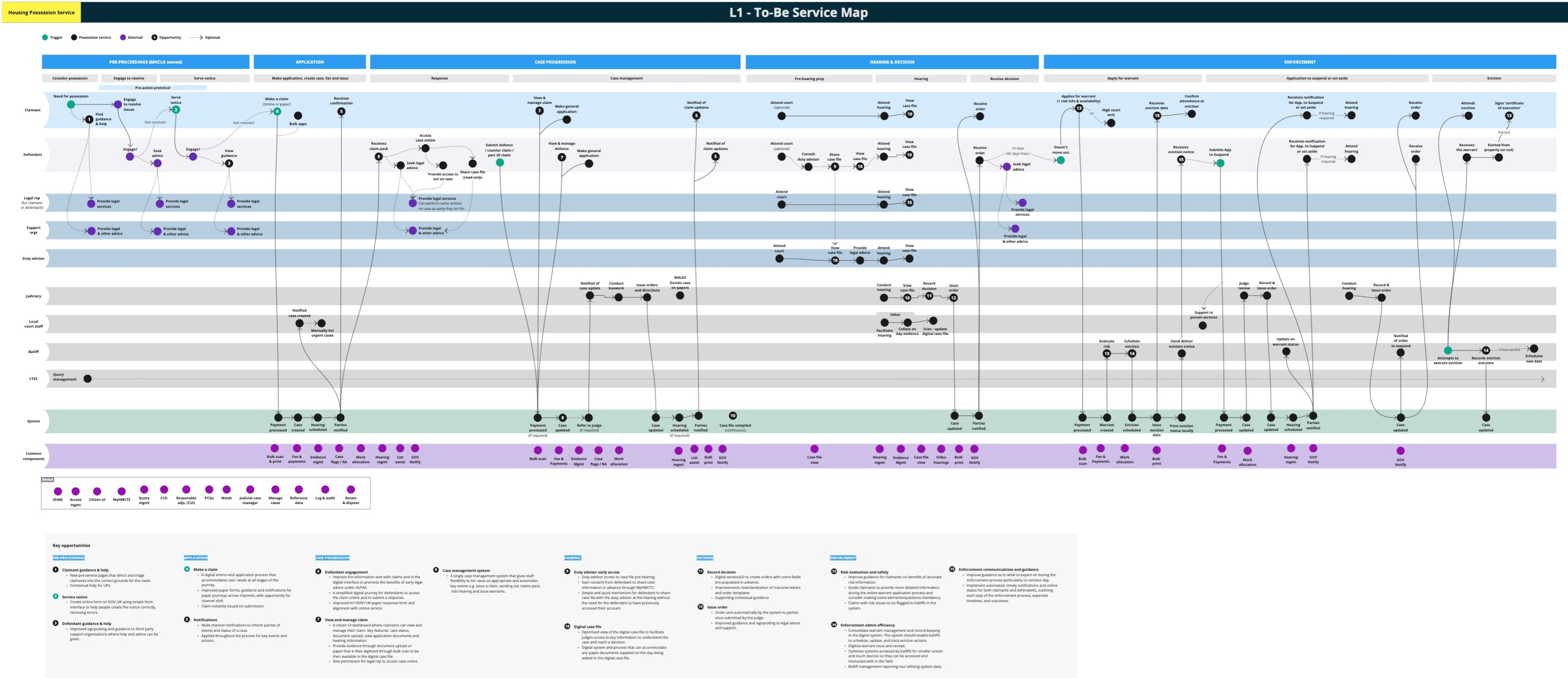
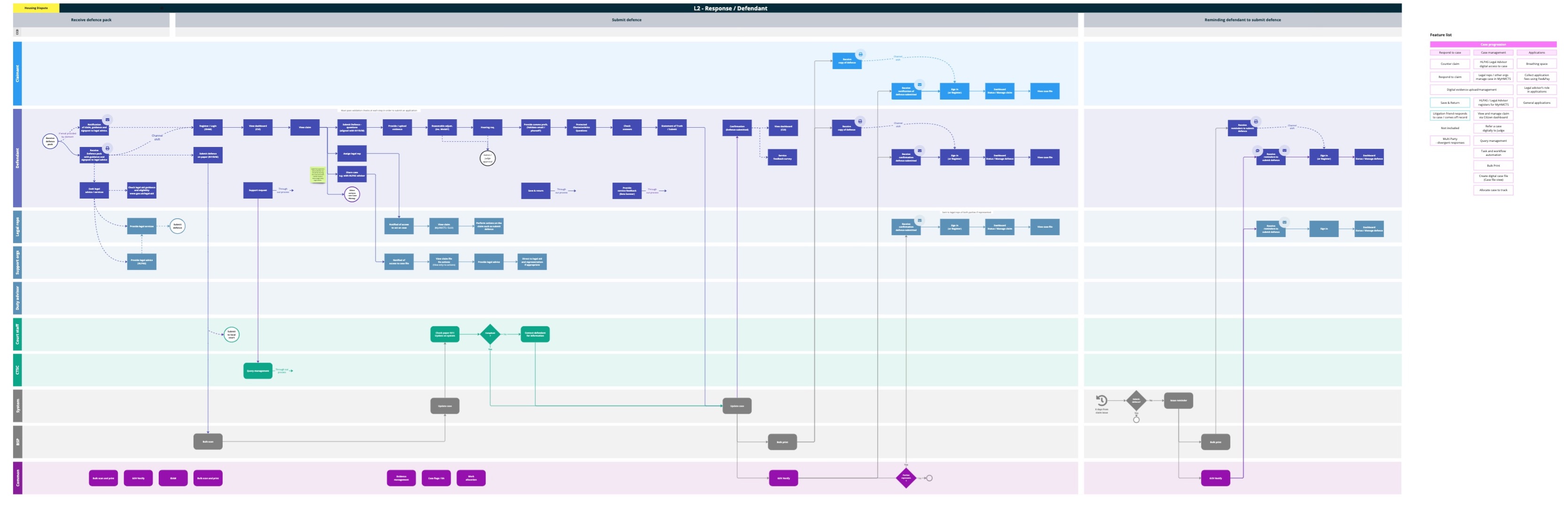
To capture the full scope of the redesigned service, I developed a comprehensive end-to-end future state service map and Level 2 service design maps for specific service journey scenarios.
End-to-end future state service map. A high-level visualisation of the redesigned service, highlighting streamlined user interactions and improved processes at each stage.
Detailed future state service maps. Scenario-based view illustrates process flows for particular user groups or claim types, providing an actionable guide for implementation.
Outcomes
Implementing these solutions is expected to yield significant benefits, including:
- Improved user experience: the updated digital service will support all grounds for possession, offering simplified communications and real-time tracking to enhance ease of use and process understanding
- Greater engagement and preparedness: early stage guidance and support will encourage defendants to engage proactively, reducing unnecessary escalations to court and shortening case durations
- Increased operational efficiency: digital systems and automated workflows will reduce paperwork, improve accuracy and allow HMCTS staff to focus on higher-priority tasks
- Legislative compliance: the flexible system will accommodate new legal requirements under the Renters’ Rights Act and enable adaptability to future legislative changes
Handover and next steps
At the close of the discovery phase, I prepared a comprehensive handover for the incoming UCD team, ensuring continuity for the next stages of design and development. The handover included a detailed briefing on the research findings, key insights and proposed solutions, along with all artefacts and recommendations to guide the team in developing the service designs through to prototypes and iterative testing with users.
As the legislation evolves, this foundation will support an adaptable, user-centred service that remains responsive to policy and user needs.
From discovery to delivery
In September 2025 I returned to the service with Transform as the service designer in one of two multidisciplinary UCD squads taking the new digital service through private beta. My squad’s scope spans making a claim for social, council and private landlords and their legal representatives, responding to a claim for tenants and case management for court staff. I directly designed the private landlord journey and the court staff casework experience, and evolved the existing social landlord and tenant journeys through beta.
It also means designing for judges using a digital housing system for the first time, working closely with senior judiciary stakeholders to shape how the service supports judicial ways of working.
Testimonial
“Steve led Service Design for the Renters’ Reform/Rights discovery. Over eight months he grasped a complex and challenging policy area, translating it into foundational service maps while the legislation was still in flux.
He worked collaboratively with a team that had varying levels of familiarity with user-centred design. He successfully took the service team through three days of workshopping to identify opportunities and shape the MVP.
The Service Manager really came to rely on him, and his handover to the incoming team was exemplary.”